
For HR professionals managing hiring operations across multiple states, E-Verify compliance represents one of the most complex regulatory challenges in modern workforce management. While the federal E-Verify system itself is relatively straightforward, the patchwork of state-level requirements, mandates, and prohibitions creates a compliance minefield that has trapped even sophisticated organizations. The consequences of E-Verify integration failures extend far beyond simple fines, creating legal liabilities, operational disruptions, and reputational damage that can fundamentally undermine business operations. Understanding the multi-jurisdictional compliance challenges—and how professional verification services address them—is essential for organizations operating across state lines.
The E-Verify landscape has evolved into a complex web of conflicting requirements that vary dramatically by state, creating compliance obligations that change based on employee location, company size, industry, and contract relationships. For organizations with distributed workforces or expansion plans, this complexity creates substantial risk exposure that traditional HR compliance approaches struggle to address effectively.
The Federal Foundation and State Variations
E-Verify is a federal web-based system operated by U.S. Citizenship and Immigration Services (USCIS) that allows employers to verify the employment eligibility of newly hired employees by comparing information from Form I-9 against government records. At the federal level, E-Verify participation is voluntary for most private employers, though mandatory for federal contractors and certain federal grant recipients. This federal framework seems simple until state requirements enter the picture.
Currently, 23 states have enacted some form of E-Verify legislation, with requirements ranging from mandatory participation for all employers to mandates affecting only specific company sizes, industries, or government contractors. These state requirements don’t simply add to federal obligations—they fundamentally alter the compliance landscape by creating jurisdiction-specific obligations that may conflict with practices acceptable in other states.
States with mandatory E-Verify requirements include Alabama, Arizona, Georgia, Louisiana, Mississippi, North Carolina, South Carolina, Tennessee, and Utah, among others. However, the specific requirements vary significantly. Some states mandate E-Verify for all employers regardless of size, while others apply requirements only to employers above certain employee thresholds. Several states require E-Verify only for public employers and contractors, while others extend requirements to specific industries.
Further complicating the landscape, certain jurisdictions have prohibited or restricted E-Verify usage. Several cities and counties have enacted legislation limiting when and how employers can use E-Verify, creating localized compliance requirements that may conflict with state-level mandates. This jurisdictional fragmentation creates scenarios where employers operating in multiple locations within a single state may face different E-Verify obligations depending on precise physical location.

The Compliance Gap: Why Multi-State Operations Face Disproportionate Risk
Organizations operating across state lines face E-Verify compliance challenges that significantly exceed those encountered by single-state employers. These challenges stem from fundamental operational realities that create multiple failure points in traditional compliance approaches.
Knowledge Gap Challenges: HR professionals typically develop expertise in the regulatory environment where they work most frequently. When organizations expand into new states, HR teams often lack awareness of state-specific E-Verify requirements, leading to unintentional non-compliance. This knowledge gap is particularly dangerous because E-Verify violations can result from both failure to use the system when required and improper usage when not required or prohibited.
System Integration Complications: E-Verify requirements interact with existing HR systems and workflows in complex ways. Organizations may have standardized onboarding processes that work well in some jurisdictions but create compliance gaps in others. Modifying these systems to accommodate varying state requirements while maintaining operational efficiency presents significant challenges.
Timing and Triggering Requirements: Different states have varying requirements regarding when E-Verify checks must be completed. Some states require verification within specific timeframes following hire dates, while others tie requirements to different triggering events. These timing variations create compliance risks when organizations apply uniform processes across multiple jurisdictions.
Employee Mobility Issues: Modern remote work arrangements have created scenarios where employee work location may change without corresponding changes to employment records or verification procedures. An employee hired to work in a state without E-Verify requirements who later relocates to a state with mandatory participation may trigger compliance obligations that weren’t apparent at hire.

The Costly Consequences of E-Verify Violations
E-Verify compliance failures create multiple categories of legal and financial exposure that extend well beyond simple penalty amounts. Understanding these consequences is essential for evaluating the true cost of inadequate compliance systems.
Direct Penalty Exposure: States with mandatory E-Verify requirements typically establish penalty structures for non-compliance. These penalties vary by state but commonly include fines ranging from $1,000 to $10,000 per unauthorized worker. Some states impose progressive penalty structures where violations increase with each subsequent offense, while others include provisions for business license suspension or revocation for pattern violations.
Arizona’s Legal Arizona Workers Act, for example, authorizes suspension of business licenses for first violations and permanent revocation for second violations involving intentional unauthorized worker employment. These penalties represent existential threats to business operations, not mere financial inconveniences.
Contract and Business Relationship Impacts: Many organizations require E-Verify compliance as a condition of vendor relationships, government contracts, or business partnerships. Failure to maintain required E-Verify participation can result in contract termination, disqualification from bidding opportunities, and damaged business relationships that affect revenue far more substantially than direct penalties.
Federal contractors face particularly severe consequences. Organizations holding federal contracts or subcontracts that fail to meet E-Verify requirements risk contract termination, suspension from future contract opportunities, and debarment from federal contracting. Given that federal contracts often represent significant revenue sources, these consequences can fundamentally impact business viability.
Legal Defense and Remediation Costs: Organizations facing E-Verify compliance investigations typically require legal representation to navigate response requirements, penalty negotiations, and remediation planning. Immigration attorneys specializing in worksite enforcement typically charge $300-$600 per hour, with investigation responses commonly generating $30,000-$150,000 in legal fees depending on violation scope and complexity.
Beyond legal defense, organizations with compliance gaps must implement remediation programs including policy updates, system modifications, training programs, and enhanced monitoring procedures. These remediation costs frequently exceed penalty amounts, particularly for organizations with distributed operations requiring systematic process changes across multiple locations.
Discrimination Claims and Additional Liability: Improper E-Verify usage creates discrimination liability under federal anti-discrimination laws. The Immigration and Nationality Act prohibits discrimination based on citizenship status or national origin in hiring, firing, and employment verification. Organizations that misuse E-Verify by selectively applying verification to certain employees, using E-Verify results improperly in hiring decisions, or failing to follow required procedures may face discrimination claims that create additional legal exposure.
The Office of Special Counsel for Immigration-Related Unfair Employment Practices (OSC) investigates and prosecutes discrimination claims related to E-Verify usage. Successful discrimination claims can result in civil penalties, back pay awards, and other remedies that substantially increase total violation costs.
Common E-Verify Integration Failures in Multi-State Operations
Specific compliance failures recur frequently in multi-state operations, reflecting common gaps in traditional compliance approaches. Understanding these failure patterns helps organizations identify vulnerabilities in their current systems.
Incomplete Geographic Coverage: Organizations often implement E-Verify in states with clear mandatory requirements while overlooking states with more nuanced obligations. For example, a company might use E-Verify for employees in states with universal mandates but fail to implement it for employees in states where requirements apply only to specific company sizes or industries. This patchwork approach creates compliance gaps when business changes trigger previously inapplicable requirements.
Contractor and Third-Party Worker Oversights: Many state E-Verify requirements extend beyond direct employees to include various categories of workers including independent contractors, temporary workers, and staffing agency personnel. Organizations frequently fail to verify whether their contractor and third-party worker relationships trigger state-specific E-Verify obligations, creating compliance gaps in workforce categories that receive less HR attention than traditional employees.
Remote Worker Location Complications: The rise of remote work has created scenarios where employee work location differs from company office locations, hiring location, or HR department location. Organizations often apply E-Verify requirements based on company location rather than employee work location, creating compliance gaps when these differ. An employee working remotely from Alabama for a California-based company triggers Alabama’s mandatory E-Verify requirements regardless of where the company is headquartered.
New Hire Definition Variations: States vary in defining which employees constitute “new hires” subject to E-Verify requirements. Some states apply requirements only to employees hired after effective dates of E-Verify legislation, while others extend requirements to existing employees through rehire provisions, position changes, or other triggering events. Organizations using uniform new hire definitions across all jurisdictions may miss state-specific triggering events that create verification obligations.
Timing Requirement Failures: States with mandatory E-Verify requirements often specify timeframes within which verification must be completed. These timing requirements vary by state, with some requiring verification within three business days of hire and others allowing different timeframes. Organizations applying uniform timing procedures across all locations may violate state-specific timing requirements without realizing procedural non-compliance.
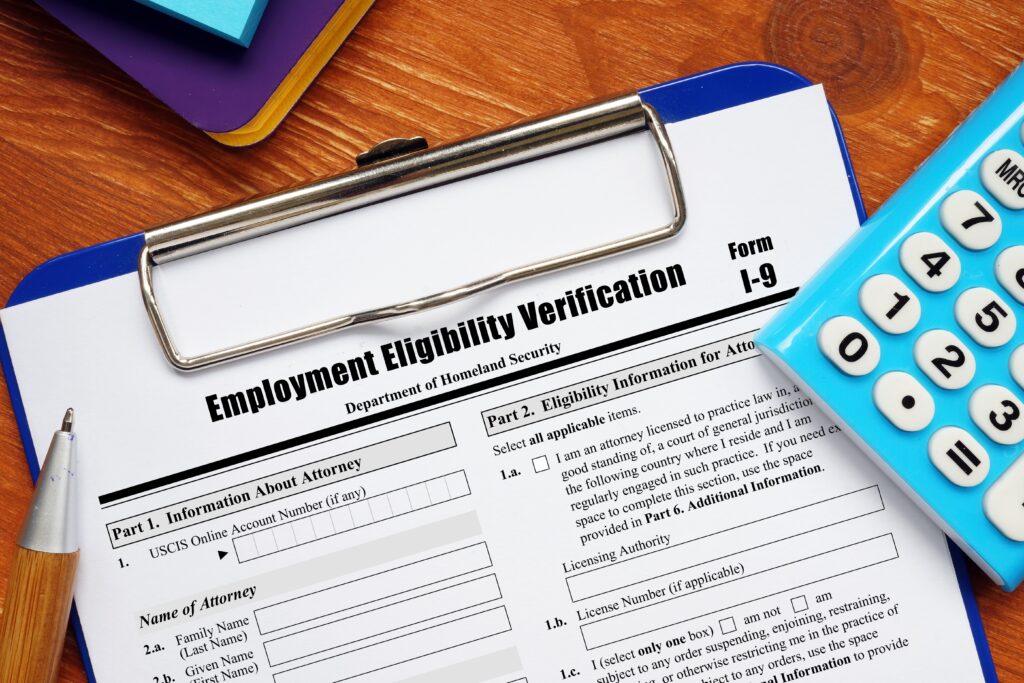
Record Retention and Documentation Gaps: E-Verify creates documentation obligations that extend beyond standard I-9 record retention. Organizations must maintain records of E-Verify queries, results, and follow-up actions taken. State requirements may impose additional documentation obligations beyond federal standards. Failure to maintain appropriate records can create compliance violations even when verification was performed correctly, as organizations cannot demonstrate compliance without proper documentation.

The Professional Solution: How Specialized Verification Services Address Multi-State Complexity
Professional employment verification services address the root causes of multi-state E-Verify compliance failures through systematic approaches that eliminate the knowledge gaps, process inconsistencies, and oversight risks inherent in traditional HR compliance methods.
Jurisdictional Expertise and Continuous Monitoring: Professional verification services maintain current knowledge of E-Verify requirements across all states, including ongoing legislative changes, regulatory updates, and implementation guidance. This jurisdictional expertise ensures appropriate verification procedures based on actual employee work location rather than generalized company policies that may not reflect state-specific requirements.
As state legislatures continue to modify E-Verify requirements, professional services track these changes and implement procedural updates automatically. This continuous monitoring eliminates the risk that organizations will continue using outdated procedures that no longer meet current requirements.
Location-Based Procedure Application: Professional services implement verification procedures based on employee work location rather than company location, ensuring compliance with requirements that vary by jurisdiction. This location-based approach addresses the compliance gaps that emerge when employee work location differs from company headquarters, HR department location, or hiring location.
For remote employees or those who may relocate during employment, professional services can implement monitoring procedures that identify work location changes triggering new verification requirements. This dynamic approach prevents the compliance gaps that emerge when employee circumstances change after hire.
Comprehensive Worker Category Coverage: Professional verification services extend coverage to all worker categories potentially subject to E-Verify requirements including direct employees, independent contractors, temporary workers, and other workforce participants. This comprehensive coverage prevents the oversight risks that emerge when organizations focus verification efforts primarily on traditional employee relationships while overlooking other worker categories that may trigger state-specific obligations.
Timing Compliance and Documentation: Professional services implement state-specific timing procedures ensuring verification occurs within required timeframes regardless of location. This procedural precision eliminates timing violations that can occur when organizations apply uniform procedures across jurisdictions with varying timing requirements.
Similarly, professional services maintain comprehensive documentation of verification activities, creating audit-ready records that demonstrate compliance with both federal and state requirements. This documentation proves invaluable during audits or investigations, as organizations can demonstrate procedural compliance through detailed verification records.

Discrimination Risk Mitigation: Professional verification services implement consistent procedures across all employees regardless of national origin, citizenship status, or other protected characteristics. This consistency reduces discrimination risks that can emerge when verification procedures are applied inconsistently or when HR personnel make subjective decisions about which employees require verification.
By removing discretion from verification decisions and implementing systematic procedures based on objective criteria, professional services help organizations avoid the discrimination claims that often accompany E-Verify compliance investigations.
Business Case Analysis: Cost-Benefit of Professional Services
Organizations evaluating professional E-Verify verification services should consider the total cost of compliance failure against service investment. For most multi-state organizations, the analysis strongly favors professional verification approaches.
Consider an organization with 1,000 employees distributed across 15 states, several of which have mandatory E-Verify requirements. If this organization experiences an E-Verify compliance investigation revealing that 50 employees in mandatory states were not properly verified, potential exposure could include:
Direct penalties ranging from $50,000 to $500,000 depending on state penalty structures and violation circumstances. Legal fees for investigation response ranging from $50,000 to $150,000. Remediation costs including system updates, policy revisions, training programs, and enhanced monitoring procedures potentially totaling $100,000 to $300,000. Contract and relationship impacts that may affect revenue opportunities worth substantially more than direct penalties and legal costs.
Total exposure from this scenario easily exceeds $500,000 and could reach $1 million or more depending on specific circumstances and contract relationships affected.
Professional E-Verify verification services typically cost $20-$40 per verification depending on service scope and complexity. For the same 1,000-employee organization, annual verification costs might total $20,000-$40,000—a small fraction of potential compliance failure costs.
The cost-benefit analysis becomes even more favorable when considering operational efficiency gains. Professional verification services eliminate the HR staff time spent understanding multi-state requirements, implementing location-specific procedures, and maintaining compliance monitoring systems. For distributed organizations, this time savings can be substantial, freeing HR professionals for higher-value activities while ensuring compliance across all locations.

Implementation Strategies for Maximum Compliance Value
Organizations transitioning to professional E-Verify verification services should approach implementation strategically to maximize compliance benefits while minimizing operational disruption.
Comprehensive Audit Before Implementation: Organizations should conduct thorough audits of current E-Verify compliance status across all locations before implementing professional services. This audit identifies existing compliance gaps, determines which employee populations require verification under current requirements, and establishes baseline compliance status that informs remediation priorities.
Phased Implementation for Large Organizations: Organizations with substantial employee populations or complex geographic footprints may benefit from phased implementation approaches that begin with highest-risk locations or newest hires while systematically extending coverage to all appropriate employee populations. This phased approach ensures quality implementation while avoiding operational disruption from attempting system-wide changes simultaneously.
Integration with Existing HR Systems: Professional verification services should integrate with existing HR information systems, applicant tracking systems, and onboarding workflows to create seamless processes that minimize administrative burden while ensuring comprehensive coverage. Modern verification platforms offer integration capabilities that allow verification to occur automatically as part of existing onboarding workflows.
Training and Change Management: While professional services handle verification procedures, HR teams require training on the new processes, their role in the verification workflow, and procedures for handling verification results or issues. Effective training ensures smooth implementation and helps HR professionals understand how professional verification services complement rather than replace their compliance responsibilities.
Ongoing Compliance Monitoring: Even with professional verification services, organizations should maintain oversight of compliance status through regular reporting, periodic audits, and monitoring of service performance. This ongoing monitoring ensures verification services continue meeting organizational needs and compliance requirements as business conditions and regulatory requirements evolve.

The Strategic Advantage of Proactive Multi-State E-Verify Compliance
Organizations that implement professional E-Verify verification services gain strategic advantages that extend beyond basic compliance risk mitigation.
Geographic Expansion Enablement: Professional verification services eliminate E-Verify compliance as a barrier to geographic expansion. Organizations can enter new states or hire remote employees in any location without first researching state-specific requirements, developing new procedures, or training staff on jurisdictional variations. This expansion agility supports business growth while maintaining compliance across all locations.
Competitive Advantage in Contracting: Organizations with robust E-Verify compliance can pursue contract opportunities that require verification participation without first implementing compliance systems. This competitive advantage can be particularly valuable for government contracting opportunities where E-Verify participation is mandatory or preferred.
Risk Management Excellence: Professional E-Verify verification demonstrates sophisticated risk management practices that may benefit organizations in other compliance areas. The procedural discipline and systematic approach required for multi-state E-Verify compliance often improves broader HR compliance practices, creating operational benefits that extend beyond E-Verify requirements specifically.
Audit Readiness and Regulatory Confidence: Organizations with professional verification services maintain comprehensive documentation and proven procedures that support confident responses to regulatory inquiries, audits, or investigations. This audit readiness reduces the stress and cost associated with regulatory interactions while demonstrating good faith compliance efforts that may influence penalty determinations if violations are identified.
For HR professionals managing compliance in multi-state organizations, the question isn’t whether professional E-Verify verification represents a worthwhile investment—it’s whether the organization can afford the risks of continued patchwork compliance approaches. In an increasingly complex regulatory environment where state requirements continue to evolve and enforcement priorities remain high, proactive compliance through professional services isn’t optional—it’s essential business protection.
Organizations seeking to eliminate multi-state E-Verify compliance risks while supporting operational flexibility should consider comprehensive verification solutions that provide consistent procedures across all jurisdictions. Professional services transform E-Verify compliance from a complex liability into a managed process that supports rather than constrains business objectives.
Ready to eliminate multi-state E-Verify complexity while ensuring comprehensive compliance across all locations? Discover how TrendSource Remote I-9 Verifications provides consistent, reliable E-Verify compliance regardless of where your employees work.